The look of the mosque
Stone, tile and the word
The revived mosque is built in the traditions of the Shirvan-Absheron school: pale stone, pointed arches, ribbed domes. Outside, austere sandstone; inside, the glow of marble, tiles and gold.
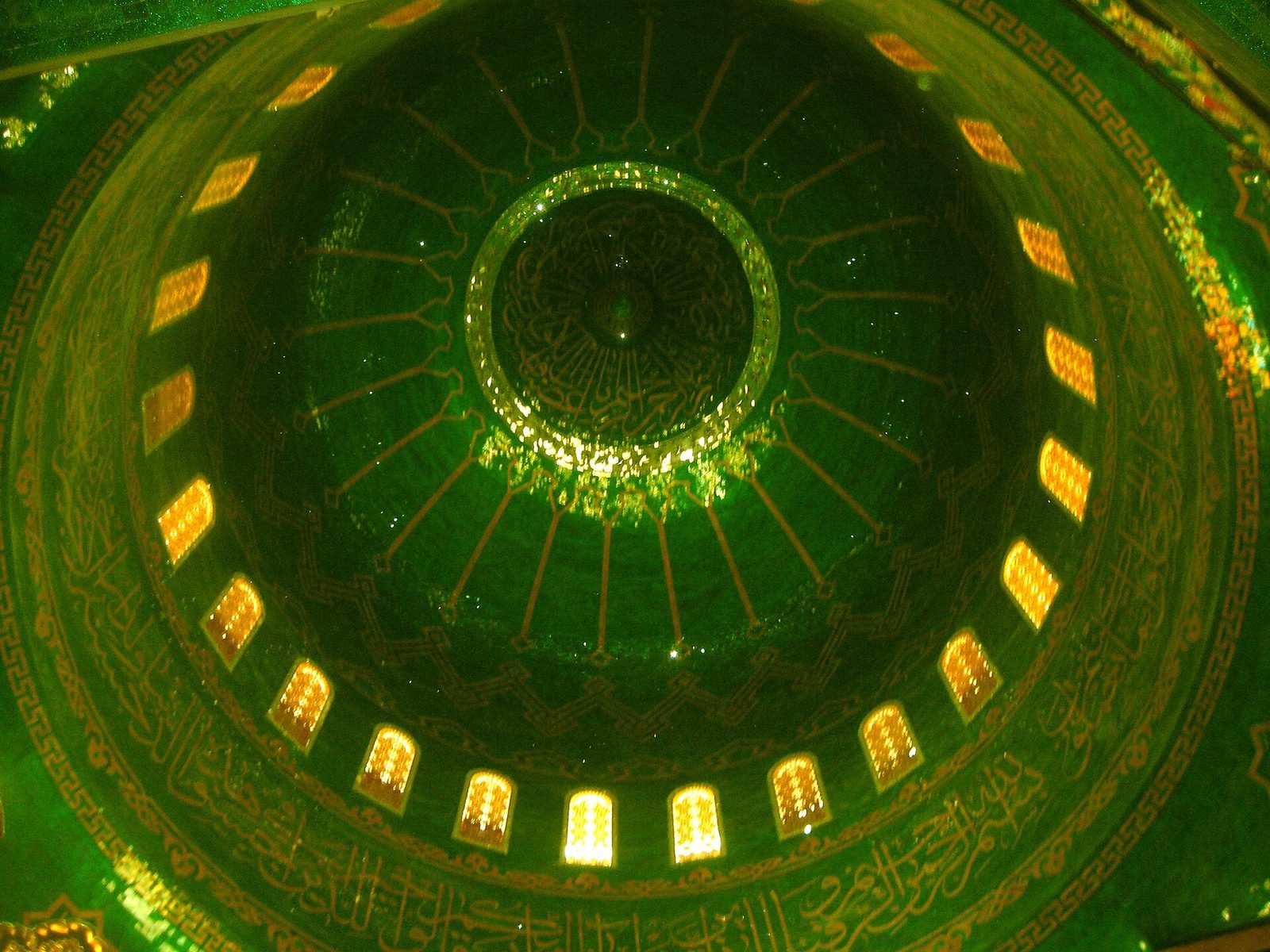
The ensemble is crowned by three domes and two minarets. The main dome is painted in green and gold, with a band of Quranic calligraphy along its rim.
Inside are separate prayer halls for men and women, and at the very heart of the mosque is the tomb of Ukeyma Khanum.
Three domes
The ensemble is crowned by three ribbed domes of pale stone — the recognisable silhouette of the mosque above the sea.
Two minarets
Slender minarets on either side mark the mosque from afar and continue the tradition of Absheron architecture.
The main dome
From within, the main dome is painted in deep green and gold, with a ring of inscriptions and a glowing chandelier at its centre.
Calligraphy
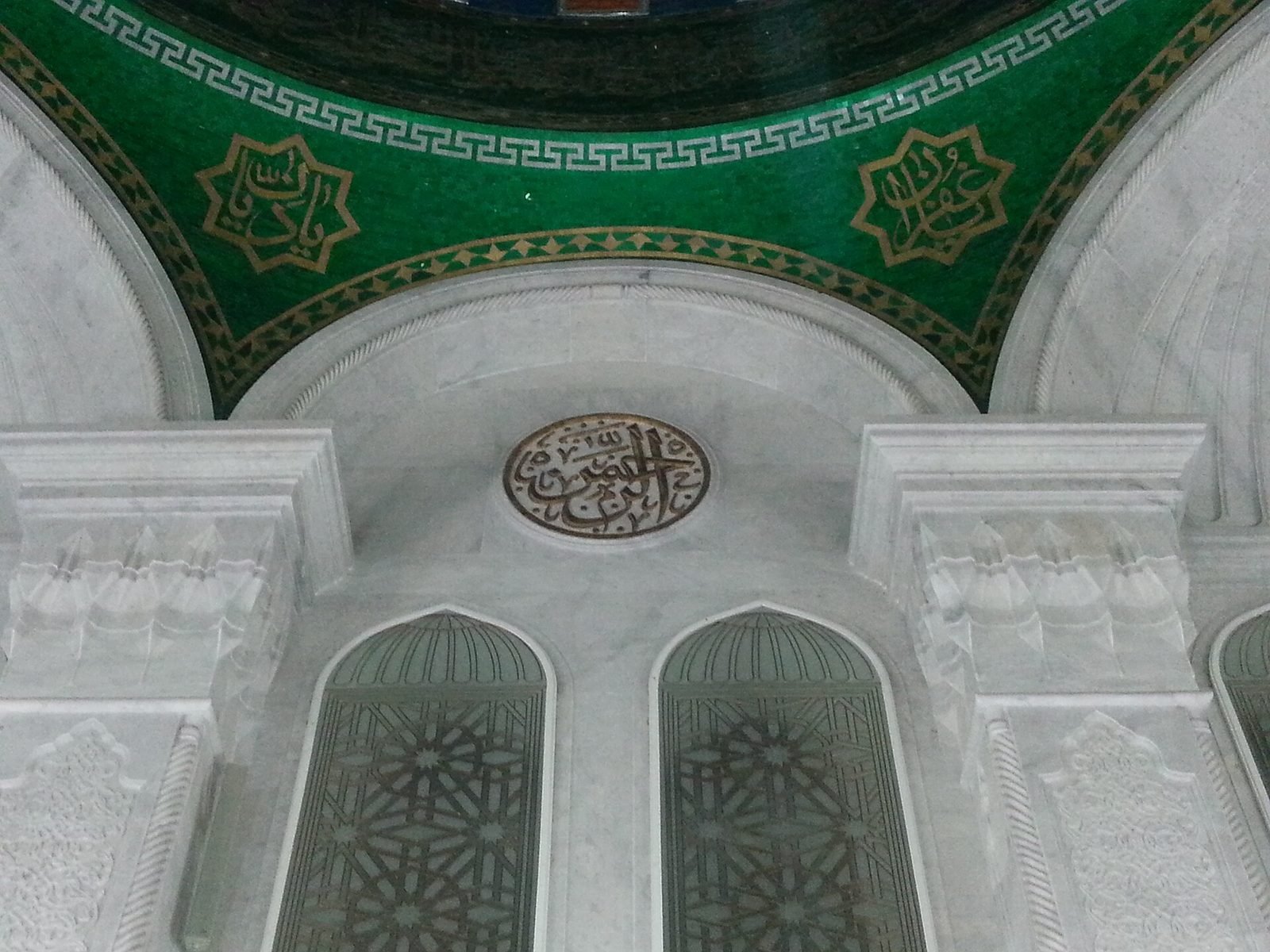
Walls and vaults are adorned with the golden script of Quranic verses — the word as part of the architecture.
Marble and tiles
The white marble of the walls is combined with green and gold tiles and fine stone carving.
Prayer halls
The mosque has separate prayer halls for men and women, as well as a space by the tomb.
 Calligraphy
Light and the word
When the walls speak
Inside the mosque, white marble meets green mosaics and golden medallions of inscriptions. Light from the pointed windows glides over the verses, and the interior seems woven from light.
Here architecture and calligraphy are one: the stone carries the word, and the word adorns the stone.