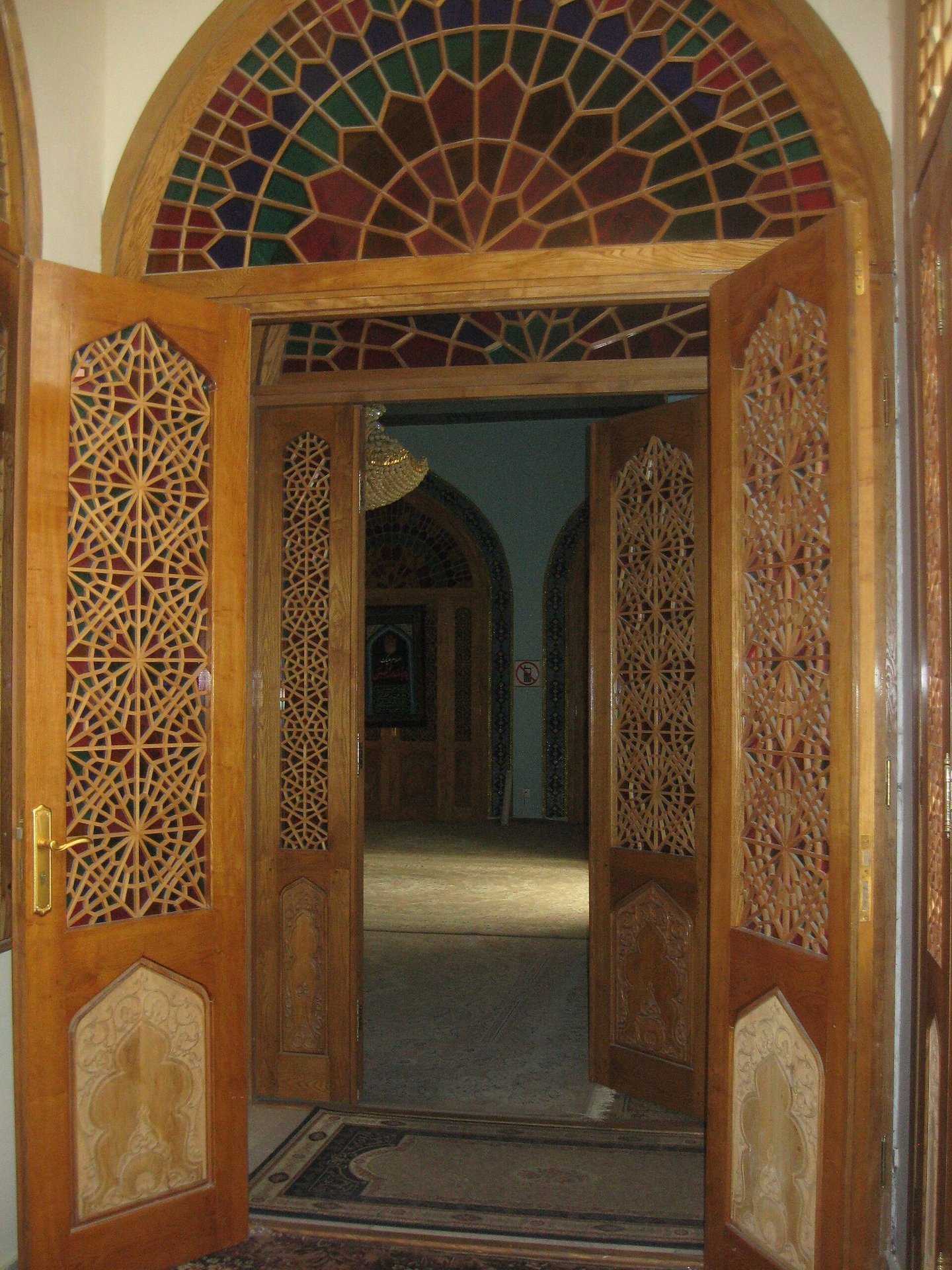
Eight centuries
From a tomb to a rebirth
The history of Bibi-Heybat begins with the tomb of Ukeyma Khanum, daughter of the seventh Shia Imam Musa al-Kazim. By tradition, fleeing persecution, she found refuge on this shore and was buried here.
As early as the 13th century a mosque was raised over her grave; it is linked to the age of the Shirvanshahs. For centuries pilgrims came here, and in the 19th century the shrine was described by the visiting Alexandre Dumas.
In 1936 the mosque was blown up. Only after independence was it rebuilt from scratch — and today the revived Bibi-Heybat once again receives the faithful.
Ukeyma Khanum
Daughter of the seventh Imam Musa al-Kazim, who found refuge on the Caspian shore. Her tomb is the heart of the shrine.
The first mosque
The mosque over the tomb was raised in the 13th century; its appearance is linked to the age of the Shirvanshahs.
Centuries of pilgrimage
For centuries Bibi-Heybat was one of the main places of pilgrimage for the Muslims of the Caucasus.
Alexandre Dumas
In the 1850s the French writer Alexandre Dumas visited the shrine and mentioned it in his travel notes.
Destruction in 1936
At the height of the Soviet campaign against religion the ancient mosque was blown up. The shrine was lost for almost 60 years.
Rebirth
From 1994 the mosque was rebuilt on its former site; by 2008 the present ensemble had risen.
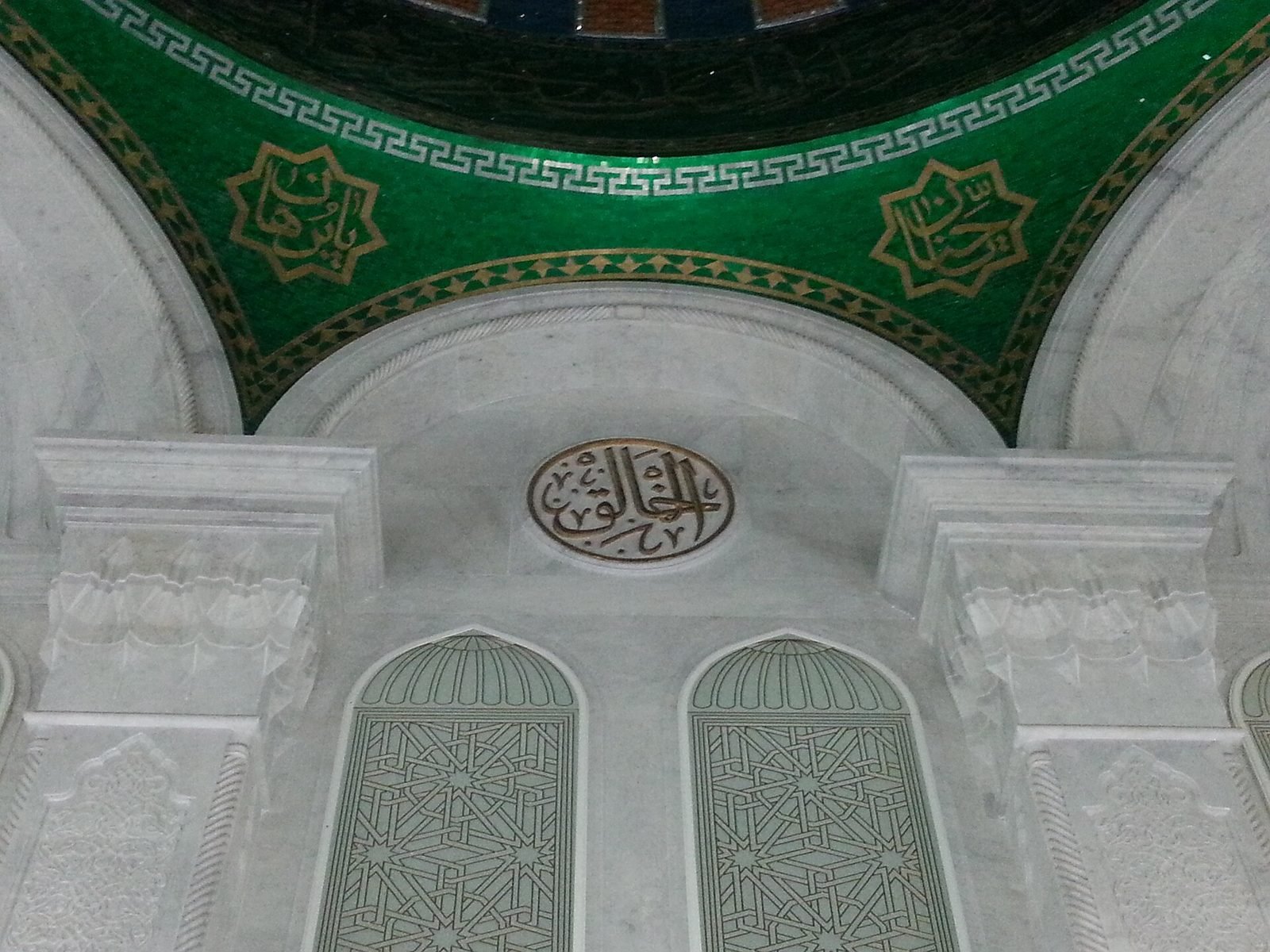 Inside
Memory of place
A shrine that returned
The revived mosque was built anew, but on the same site and in the same spirit. Beneath the domes prayer sounds again, and people once more come to the tomb.
The story of Bibi-Heybat became a story of how a shrine can be destroyed — but cannot be erased from a people's memory.